

Every Kerala homeowner knows the smell. You open a cupboard after the monsoon and get that damp, musty air, with white fungus creeping along the corners and clothes that feel slightly clammy. Then you notice the cabinet door has swollen and won’t close properly.
It isn’t bad luck or poor cleaning. Kerala’s climate is simply tough on furniture, and the wrong cabinet material gives up within a few seasons. Here is what actually works, what to avoid, and how to keep your storage in good shape for years.
Why Kerala Homes Fight a Losing Battle With Humidity
Kerala sees humidity above 80% for much of the year, and the monsoon pushes it even higher. Coastal towns like Calicut get salty air on top of that. Moisture slips into ordinary board, swells the fibres and loosens the glue. Fungus follows, then warping and peeling. Closed spaces suffer most. A cabinet with no airflow holds moisture like a sealed box, and whatever you store inside, such as clothes, documents, utensils or electronics, pays the price.
Which Materials Actually Survive the Monsoon?
Not all boards are equal. Here is how the common options hold up in our conditions.
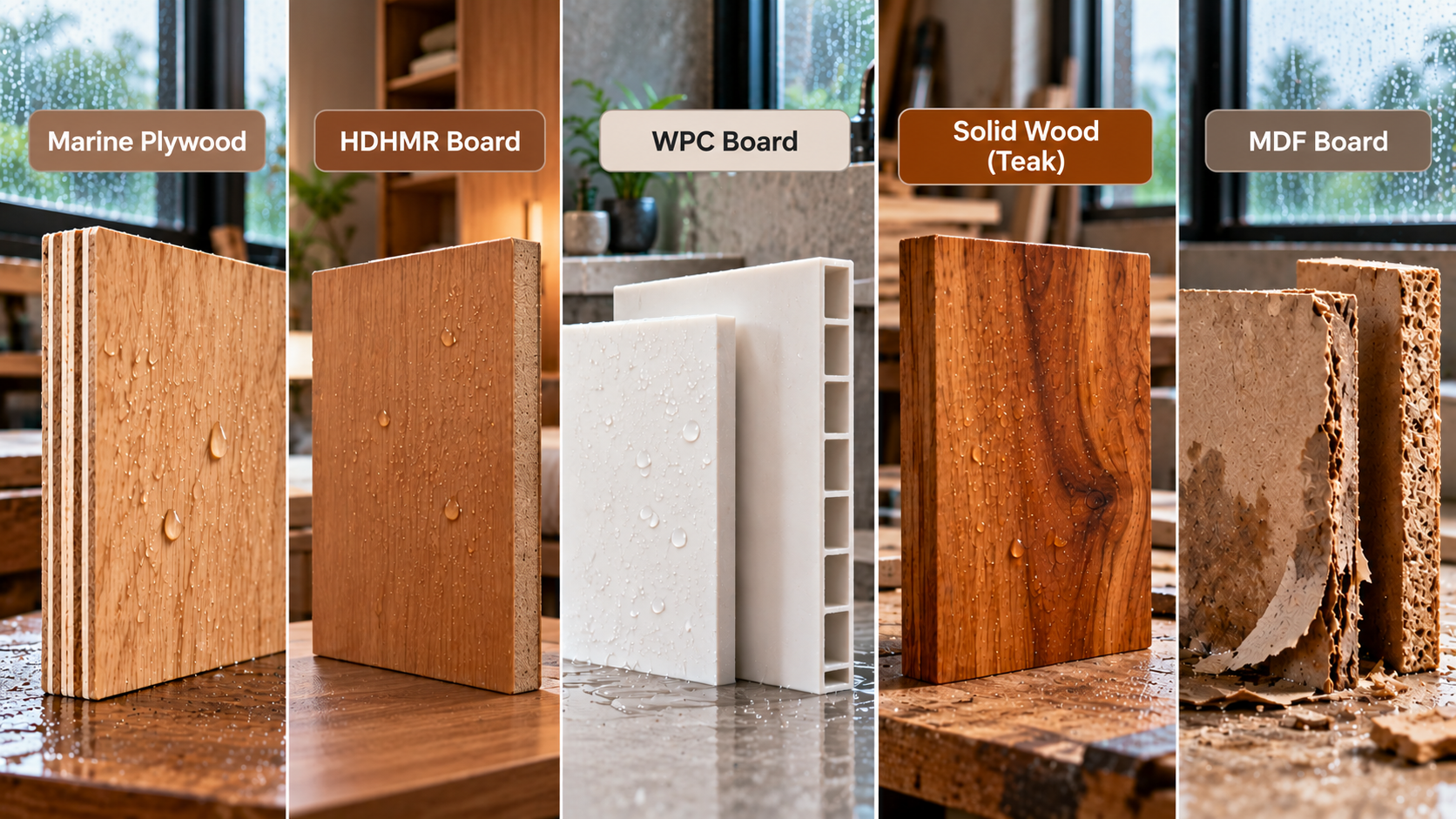
Marine Plywood
Despite the name, marine plywood is built to resist moisture. It uses waterproof adhesive between layers and holds its shape in damp conditions. It costs more than regular plywood, but it is the safest all-round choice for Kerala homes.
HDHMR Boards
High Density High Moisture Resistant boards are dense, smooth and take laminates well. They handle humidity better than standard MDF and work nicely for bedroom and living room storage.
WPC and PVC Boards
Wood plastic composite boards are close to fully waterproof. Termites don’t touch them and water doesn’t swell them. They suit kitchens, utility areas and bathrooms where splashes are routine.
Solid Wood
Seasoned teak and similar hardwoods last for decades, but only when properly treated and sealed. Untreated wood absorbs and releases moisture with the seasons and can crack or warp.
What to Skip
Plain MDF and low-grade particle board are the usual culprits behind swollen shutters. They look fine in a showroom and fall apart after two monsoons.
Where Moisture-Proof Storage Cabinets Make the Biggest Difference
If your budget is limited, put the best material where moisture hits hardest. That is where moisture-proof storage cabinets earn their money.
- Kitchen: Steam, spills and daily cleaning put constant stress on cabinets.
- Bedroom wardrobes: Clothes trap damp, and closed doors trap it further.
- Bathroom and wash areas: Direct splashes and poor ventilation.
- Store rooms and utility spaces: Often in outer walls with the least airflow.
- Rooms near the coast: Salt in the air speeds up corrosion of hinges and handles.
For kitchens, the cabinet carcass matters more than the shutter finish. Many families planning a modular kitchen in Calicut focus on colours and counters first, then discover the base units swell near the sink. Ask about the core material before you pick a finish.
The Real Benefits of Choosing Moisture-Resistant Storage
Spending a little more upfront pays off over time.
- Longer lifespan. Good cabinets last 15 to 20 years instead of needing replacement every five.
- Healthier home. Less damp means less mould, which helps anyone with allergies or breathing issues.
- Protected belongings. Clothes, books, documents and gadgets stay dry and fresh.
- Lower repair bills. No re-polishing, no swollen shutters, no replacing hinges every year.
- Better resale appeal. Buyers notice well-kept interiors immediately.
Common Mistakes to Avoid
Most cabinet failures come from avoidable decisions, not bad luck. Watch out for these:
- Choosing by looks alone. A glossy laminate can hide a weak board underneath.
- Ignoring edge sealing. Raw edges soak up water. Edges should be sealed with proper PVC banding.
- Skipping ventilation. Closed cabinets against outer walls need small gaps or vents.
- Using cheap hardware. Rust-prone hinges and handles fail first in humid climates. Pick stainless steel or coated fittings.
- Placing cabinets flush against damp walls. Leave a small gap, or add a moisture barrier behind the unit.
- Overpacking. Crowded shelves block airflow and trap dampness.
How to Maintain Your Cabinets Through the Monsoon
Even the best material needs a little care. A simple routine goes a long way:
- Open doors and drawers for an hour on dry, sunny days to let air circulate.
- Wipe spills and water marks immediately with a dry cloth.
- Keep silica gel packets, camphor or charcoal bags inside wardrobes.
- Check hinges and handles every few months and add a drop of oil where needed.
- Clean shelves with a mild cleaner, never soaking wet cloths.
- Look for early signs of fungus, such as white patches or a musty smell, and treat them quickly.
Small habits like these stop minor dampness from becoming permanent damage.
How to Choose the Right Cabinet for Your Home
Start with a clear picture of where each cabinet will live and how much moisture it will face. Then ask your supplier a few direct questions:
- What is the core board, and what is its moisture rating?
- How are the edges sealed?
- Is the hardware rust-resistant?
- Is there a written warranty against moisture damage?
If you prefer to see and touch the material before deciding, a trusted furniture shop in Calicut lets you check board thickness, finish quality and hardware in person, which a catalogue can’t show.
For full-home projects, working with an experienced interior design company in Calicut helps because the team already understands local humidity and plans ventilation, material choice and layout together instead of treating them as separate decisions.
Frequently Asked Questions
Are moisture-resistant cabinets really waterproof?
Not all of them. Materials like WPC and PVC are close to waterproof, while marine plywood and HDHMR are highly resistant but still need sealed edges and basic care.
Is marine plywood worth the extra cost in Kerala?
Yes, for kitchens, bathrooms and wardrobes on outer walls. It usually costs less over time than replacing damaged cabinets.
How do I stop my wardrobe from smelling musty?
Improve ventilation, keep moisture absorbers inside, avoid storing damp clothes, and air the wardrobe regularly during the monsoon.
Can I make my existing cabinets more moisture-resistant?
You can improve them. Seal exposed edges, add a moisture barrier behind the unit, replace rusted hardware and use absorbers inside. Severely swollen boards, however, usually need replacing.
Do these cabinets look different from regular ones?
Not at all. They come in the same laminates, veneers and finishes, so you get the style you want with far better durability.
Ready to Build Storage That Lasts?
Kerala’s weather isn’t going to change, but your storage can be built to handle it. Smart material choices, sealed edges, good hardware and a bit of seasonal care make the difference between cabinets that fail in three years and ones that still look good after fifteen. If you want your home to stay fresh through every monsoon, invest in moisture-proof storage cabinets from the start. You will save money, protect your belongings and enjoy a healthier living space.
At Hedra, we design and build interiors that are made for Kerala’s climate, from wardrobes to complete kitchens. Visit hedra.in or get in touch with our team to book a free consultation and get a quote for your home.
Add a Comment