
master-bedroom-colour-combinations-hedra

Master Bedroom Colour Combinations: Trending Ideas for 2026

Walk into a beautifully designed bedroom, and you’ll notice something before the furniture, before the layout, even before the lighting. It’s the colour. That first wash of tone sets the mood for the entire room, whether it’s calm and restful or bold and energising. Choosing the right master bedroom colour combinations isn’t about following trends blindly. It’s about understanding how colour affects sleep, mood, and the overall feel of your personal space. And in 2026, the direction is clear: warmth, texture, and quiet sophistication are taking over from stark minimalism.

Let’s get into what’s actually working this year and how to pick a palette that feels timeless rather than trendy for six months.

Why Bedroom Colour Choices Matter More Than People Think

The bedroom is the one room where you spend hours in a semi-conscious state. Unlike a living room designed for activity, a bedroom needs to support rest. That means colour choice isn’t purely aesthetic here; it’s functional. Studies on colour psychology consistently point to muted, cooler tones supporting relaxation, while overly saturated or high-contrast palettes can subtly keep the mind alert. This is exactly why a lot of high-energy accent walls that look stunning in photos don’t always translate to good sleep in real life.

Top Master Bedroom Colour Combinations for 2026

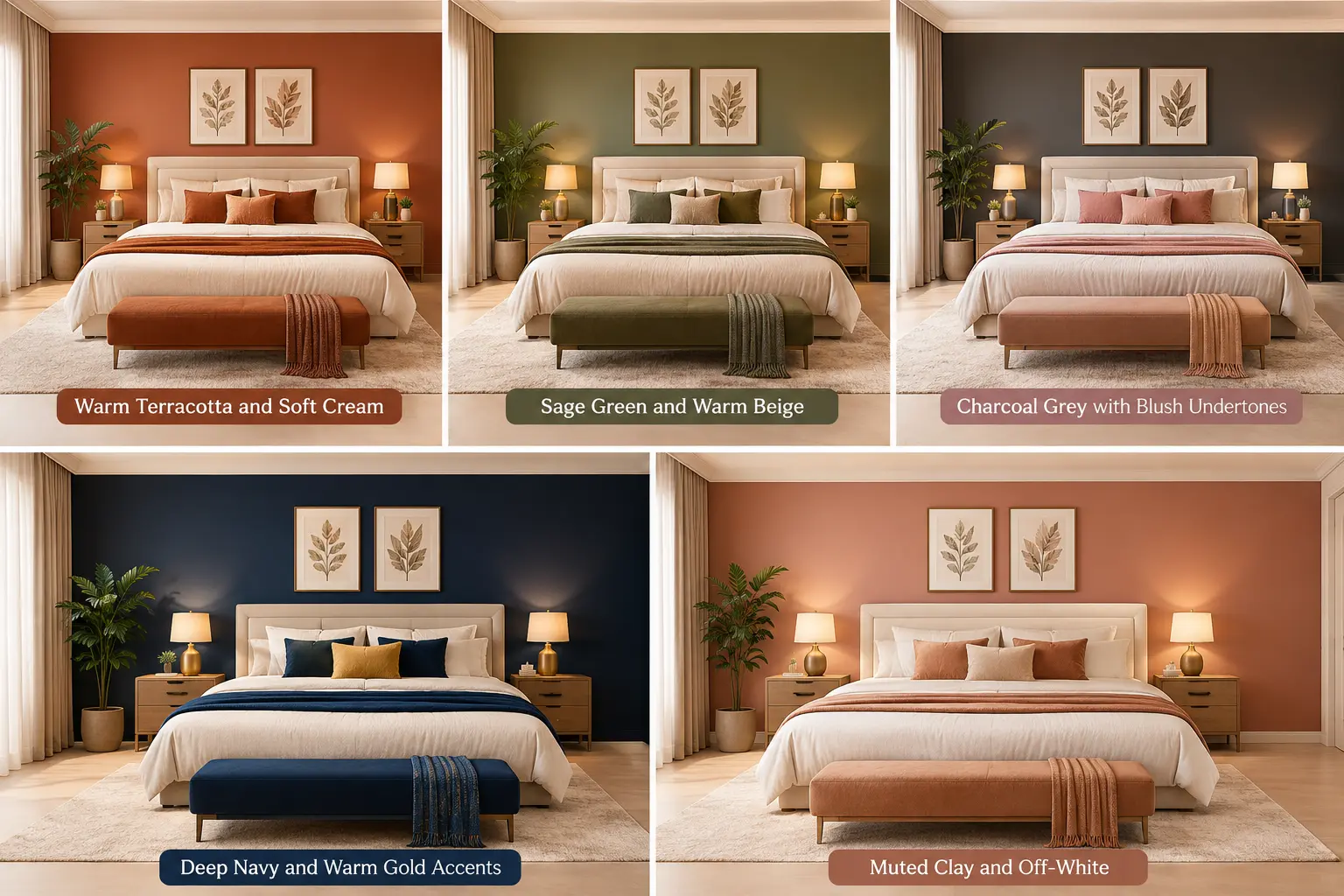
1. Warm Terracotta and Soft Cream

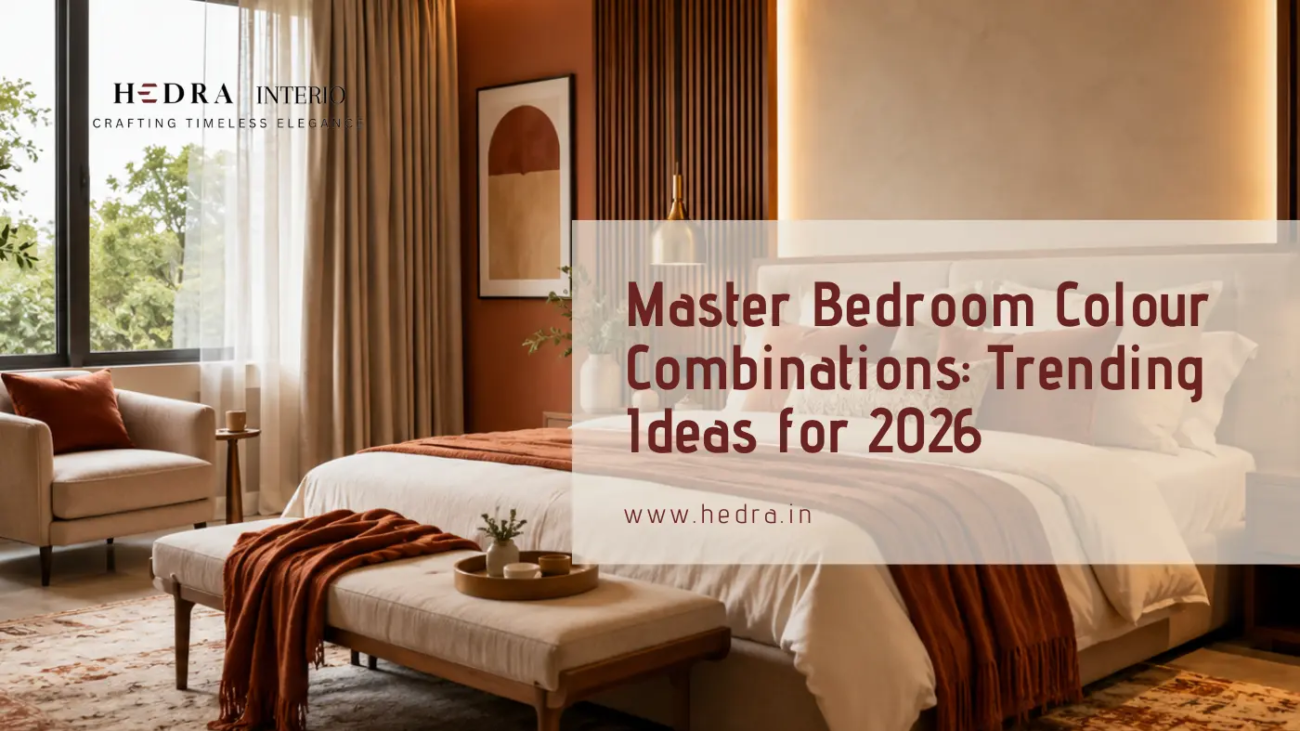
This pairing has quietly become one of the most requested combinations this year. Terracotta brings warmth without feeling heavy, especially when balanced against cream or off-white walls and linens. It works particularly well in rooms with natural wood furniture.

2. Sage Green and Warm Beige

Green has been trending across interiors for a few years now, but sage specifically has staying power because it’s soft enough to feel calming, not overpowering. Paired with beige, it creates a grounded, nature-inspired bedroom without going full botanical theme.

3. Charcoal Grey with Blush Undertones

For those who want a slightly more dramatic bedroom, charcoal grey paired with a soft blush accent wall or textiles offers sophistication without feeling cold. This combination photographs beautifully but also holds up well in daily living.

4. Deep Navy and Warm Gold Accents

Navy has become a favourite for feature walls behind the headboard, especially when paired with warm gold or brass fixtures. It reads as luxurious without needing an entirely dark room.

5. Muted Clay and Off-White

Clay tones are having a real moment in 2026. They sit somewhere between terracotta and dusty pink, offering warmth that suits both traditional and contemporary bedroom styles.

How to Choose the Right Combination for Your Space

Picking a palette isn’t just about what looks good on a paint swatch or Pinterest board. A few practical factors matter more than trend-chasing.

Consider these before finalising your palette:

  1. Natural light in the room. North-facing rooms often need warmer tones to avoid feeling cold. South-facing rooms can handle cooler palettes more comfortably.
  2. Room size. Darker, richer tones can make a large room feel cozier, but the same shade in a small room might feel cramped without the right lighting balance.
  3. Existing furniture and flooring. Your palette should complement what you already own, not fight against it.
  4. How the room is used. A bedroom that doubles as a reading nook or workspace corner might need slightly more energizing tones than a purely restful space.

Common Mistakes to Avoid

Even well-intentioned colour choices can go wrong without a bit of planning. Here are the mistakes that come up most often.

  • Choosing colours purely from paint chips. Lighting completely changes how a shade reads on an actual wall.
  • Ignoring undertones. A grey with blue undertones can clash badly with warm wood furniture.
  • Overcommitting to a trend. Bold, ultra-specific trend colours can date a room faster than neutral bases with accent detailing.
  • Skipping a sample test. Painting a small section and observing it across morning, afternoon, and evening light prevents a lot of regret.
  • Matching everything too literally. A cohesive palette doesn’t mean every element needs to be the exact same shade family.

Benefits of Getting Your Colour Palette Right

A well-chosen palette does more than look good in photos.

  • Better sleep quality, thanks to calming, low-stimulation tones
  • A sense of cohesion between furniture, walls, and textiles
  • Longevity, since thoughtful neutral-based palettes age better than fast-trend colours
  • Increased property value, as neutral yet warm palettes tend to appeal to a broader range of buyers or tenants
  • Easier styling flexibility, allowing seasonal decor changes without a full repaint

Why Professional Guidance Makes a Difference

Colour theory sounds simple until you’re standing in a half-painted room realizing the shade looks completely different than it did on the sample card. This is where working with experienced interior designers in Calicut genuinely pays off. They understand how local light conditions, common architectural layouts, and material availability all interact with colour choices in ways that generic online guides don’t account for.

It’s also worth noting that these same colour and space principles extend beyond bedrooms. Businesses exploring office interior design Calicut solutions often deal with a similar challenge: choosing tones that support focus and comfort rather than just visual appeal. The core thinking, colour affecting mood and function, applies well beyond residential spaces.

Frequently Asked Questions

  1. What are the most popular master bedroom colour combinations for 2026?
    Warm terracotta with cream, sage green with beige, and charcoal grey with blush undertones are among the most requested this year.
  2. Should master bedroom colours match the rest of the house?
    Not necessarily. The bedroom can have its own personality, but a subtle thread of colour connection helps maintain flow throughout the home.
  3. Are dark colours a bad choice for small bedrooms?
    Not if balanced correctly. Dark tones paired with good lighting and lighter accents can still work beautifully in smaller spaces.
  4. How do I know if a colour will suit my bedroom’s lighting?
    Test a sample patch and observe it across different times of day before committing to full walls.
  5. Is it better to hire a professional for colour selection?
    For anyone unsure about undertones, lighting effects, or long-term durability, professional input often prevents costly repainting down the line.

Final Thoughts

Getting your master bedroom colour combinations right in 2026 isn’t about chasing the boldest trend of the moment. It’s about understanding light, mood, and how a space will actually feel after the initial excitement fades. The best bedrooms strike a balance between visual appeal and genuine comfort, and that balance is what makes a room feel like home rather than a showroom.

Thinking about redesigning your master bedroom or planning a full home makeover? Hedra Interio brings expert colour consultation, custom furniture, and complete interior solutions tailored to your space and lifestyle. Get in touch with Hedra Interio today for a personalised design consultation.


sustainable-interior-design-ideas-for-modern-homes

Sustainable Interior Design Ideas for Modern Homes

Most people assume that sustainable design means compromising on style. Bare walls, recycled cardboard furniture, and earthy tones that feel more like a science classroom than a home. That assumption could not be further from the truth.

Today, some of the most beautiful, luxurious, and magazine-worthy interiors are built on sustainable principles. The materials are thoughtfully sourced, the spaces are energy-efficient, and the design choices are made with longevity in mind rather than next season’s trend. The result is a home that looks exceptional and feels genuinely good to live in. If you have been thinking about redesigning your home with sustainability at its core, here is everything you need to know to do it right.

What Sustainable Interior Design Actually Means

Sustainability in interior design is not just about using recycled materials. It covers the full lifecycle of every element in your home, from where the raw materials come from, how they are processed, how long they last, and what happens to them when they are eventually replaced.

The best sustainable interior design ideas focus on three things: reducing waste, improving energy efficiency, and choosing materials that are non-toxic and responsibly sourced. When these principles guide your decisions, every room in your home becomes a reflection of both good taste and good values.

Start with the Right Materials

Material selection is where sustainable design begins and where most of the impact is made. Natural and reclaimed materials are the foundation of any eco-conscious interior. Reclaimed wood brings character and history into a space while keeping timber out of landfill. Bamboo, one of the fastest-growing plants on earth, makes for beautiful flooring, cabinetry, and furniture. Natural stone, terracotta, and clay tiles are durable, low in chemical processing, and age beautifully over time.

For textiles, look for organic cotton, linen, jute, and wool. These materials are biodegradable, free from synthetic chemical treatments, and far more breathable than their synthetic counterparts.

Let Natural Light Do the Heavy Lifting

Lighting is one of the most underrated elements in sustainable home design. The more natural light a space receives, the less artificial lighting it needs, which directly reduces energy consumption.

Work with your designer to maximise window placement, use sheer curtains instead of heavy drapes, and consider skylights in rooms that tend to feel dark. Mirrors placed strategically opposite windows can double the impact of natural light without any additional energy cost. When artificial lighting is necessary, LED fixtures are the clear choice. They consume up to 80% less energy than traditional bulbs and last significantly longer.

Sustainable Kitchen Design: Where It Matters Most

The kitchen is one of the most resource-intensive rooms in any home and also one where sustainable choices have the greatest cumulative impact.

A well-designed modular kitchen in Calicut can be built using low-emission MDF boards, water-based finishes, and energy-efficient appliances that reduce both electricity and water consumption over time. Modular kitchens are also practical from a sustainability standpoint because individual units can be repaired or replaced without ripping out the entire setup.

Key sustainable kitchen choices include:

  • Countertops made from recycled glass, reclaimed wood, or natural stone
  • Cabinet finishes using water-based, low-VOC lacquers
  • Energy Star-rated appliances for refrigerators, dishwashers, and ovens
  • Pull-out waste systems that make recycling and composting easy to integrate into daily life

Common Mistakes to Avoid in Sustainable Home Design

Even well-intentioned homeowners make these mistakes. Knowing them in advance saves time, money, and a fair amount of frustration.

  1. Greenwashing trap: Not everything labelled “eco-friendly” or “natural” actually is. Always ask for certifications and specifics rather than accepting marketing claims at face value.
  2. Ignoring durability: Cheap, sustainable-sounding products that wear out in two years are not sustainable at all. Longevity is a core part of the equation.
  3. Overlooking ventilation: Good indoor air quality depends on proper airflow. Sealing a home for energy efficiency without planning ventilation can trap pollutants inside.
  4. Following trends blindly: Sustainable design should be timeless. Chasing fast-moving trends leads to more frequent redesigns, which generates more waste.
  5. Forgetting about water: Low-flow fixtures, water-efficient landscaping, and greywater systems are all part of a holistic, sustainable home, but are often left out of interior planning entirely.

The Real Benefits of Sustainable Interior Design

Beyond the environmental impact, sustainable design delivers very practical advantages for homeowners. Working with a skilled interior design company in Calicut that understands sustainable principles means your home is designed to perform better over its entire lifespan. Here is what that looks like in practice:

  • Lower utility bills from energy-efficient lighting, appliances, and insulation
  • Better indoor air quality from non-toxic materials and finishes
  • Higher property value as eco-conscious design becomes increasingly sought after
  • Reduced maintenance costs because quality, durable materials simply last longer
  • A healthier living environment for your family, especially important for households with children or allergy sufferers

Working with the Right Design Team

Sustainable design requires a different level of planning than conventional interiors. It involves sourcing decisions, material knowledge, and an understanding of how spaces perform over time, not just how they look on day one.

Experienced interior designers in Calicut who specialise in sustainable residential projects bring this knowledge to the table from the very first consultation. They know which local suppliers offer responsibly sourced materials, how to balance aesthetics with environmental responsibility, and how to deliver a space that feels cohesive, beautiful, and built to last. The best sustainable interior design ideas are not pulled from a Pinterest board. They are developed through a genuine understanding of your lifestyle, your home’s orientation, your local climate, and your long-term goals.

Expert Tips for Getting Started

  • Begin with an audit of your current home. Identify what can be retained, repurposed, or refinished before buying anything new.
  • Invest in quality over quantity. One well-made piece of furniture lasts decades. Three cheap alternatives end up in a landfill.
  • Choose a neutral, timeless palette as your base and add personality through textures, plants, and accessories that can be updated without major redesigns.
  • Incorporate indoor plants not just for aesthetics but for their genuine air-purifying benefits.
  • Discuss your sustainability goals openly with your designer from day one so every decision aligns with them.

FAQ

Is sustainable interior design more expensive than conventional design?

It can have higher upfront costs, particularly for certified materials and quality furniture. However, the long-term savings on energy bills, reduced maintenance, and less frequent redesigns typically make it more cost-effective over the life of the home.

Can I make my existing home more sustainable without a full renovation?

Absolutely. Switching to LED lighting, adding low-VOC paint, introducing natural textiles, and incorporating indoor plants are all impactful changes that require no structural work at all.

What is the most sustainable flooring option for a home in Kerala’s climate?

Bamboo, terracotta tiles, and locally sourced natural stone are all excellent choices. They perform well in humid climates, require minimal processing, and last for decades with basic care.

How do I know if a material is genuinely sustainable?

Look for third-party certifications such as FSC for wood, OEKO-TEX for textiles, and GreenGuard for low chemical emissions. Ask your designer or supplier for documentation rather than relying on product labelling alone.

Do sustainable homes look different from conventionally designed homes?

Not at all. Sustainable design today encompasses every aesthetic from minimalist and contemporary to traditional and maximalist. The principles apply to how materials are chosen and how spaces perform, not to any particular visual style.

Conclusion: Design a Home Worth Keeping

The most sustainable home is one that is designed so well you never want to change it. When every material is chosen with care, every space is planned with purpose, and every decision is made to last, the result is an interior that ages beautifully and serves your family well for years to come. Sustainability and style are not in conflict. In the hands of the right design team, they reinforce each other in ways that make your home truly exceptional.

Ready to bring sustainable design into your home? Hedra Interio combines thoughtful material choices, timeless aesthetics, and expert craftsmanship to create interiors that are as responsible as they are beautiful. From living spaces to modular kitchens in Calicut, our team designs homes built to last.


trending-living-room-interior-design-ideas

Trending Living Room Interior Design Ideas for 2026

Your living room says a lot about you before you even say a word. It is the first space guests walk into, the room where your family unwinds at the end of the day, and the place where memories quietly accumulate over the years. Getting it right matters. And in 2026, getting it right means moving beyond trends that look good only in photographs and focusing on spaces that actually feel good to live in.

This year, the design world is shifting toward something more intentional. Less about impressing, more about inhabiting. Here is a close look at the living room interior design ideas that are defining 2026 and how you can bring them into your own home.

The Big Shift: From Showroom to Sanctuary

For years, the ideal living room was polished, symmetrical, and a little stiff. Everything matched. Nothing felt touched. 2026 is moving firmly in the opposite direction. Homeowners now want rooms that feel lived in, layered, and personal. Spaces with character. Design that tells a story rather than just filling a catalogue page. This shift has opened the door to some genuinely exciting trends that blend aesthetics with practicality in ways we have not seen before.

Top Living Room Interior Design Trends for 2026

1. Earthy Palettes with Unexpected Depth

Beige is not going anywhere, but it is getting a lot more interesting. In 2026, earthy tones are being paired with broader, moodier accents like burnt sienna, forest green, clay red, and warm charcoal. The result is a palette that feels grounded and natural without looking washed out. Walls in warm off-white or sand tones work beautifully with furniture in terracotta or olive. Add a single dark accent wall or a deep-toned sofa, and the whole room takes on a new level of sophistication.

2. Curved Furniture is Here to Stay

Hard edges are out. Soft curves are very much in. Rounded sofas, arched mirrors, oval coffee tables, and curved shelving units create a visual flow that makes a room feel more relaxed and welcoming. There is something almost instinctively comfortable about curved forms. They soften the geometry of a room and make it feel less structured, more human. If you are working with a smaller space, a curved two-seater sofa can actually make the room feel larger by eliminating sharp corners that chop up the visual field.

3. Layered Textures Over Matchy-Matchy Sets

One of the strongest living room interior design ideas gaining ground in 2026 is the art of layering textures. Linen cushions on a velvet sofa. A jute rug under a marble coffee table. A raw wood shelf beside a plastered wall. The contrast is intentional, and the effect is rich without being overdone. This approach works especially well in Kerala homes where natural materials are already part of the architectural vocabulary. If you have worked with home interior designers in Calicut, you have probably already seen this approach come to life beautifully in local projects.

4. Statement Ceilings

The fifth wall is finally getting attention. Coffered ceilings, wooden beam detailing, subtle ceiling moulding, and even soft colour washes on the ceiling are trending strongly in 2026. It is a simple shift that completely changes the character of a room, adding height, warmth, and a sense of architectural intention. For compact urban apartments, even a simple two-tone ceiling treatment or a central wooden panel can create that feeling of deliberate design.

5. Multifunctional Living Spaces

With hybrid work becoming a permanent reality for many households, the living room is being asked to do more than ever. It is a lounge, a workspace, a reading nook, and an entertainment zone all at once. Smart storage solutions, modular furniture that reconfigures easily, and discreet built-in shelving are all central to this trend. The best interior design company in Calicut are already designing living spaces around this new reality, building flexibility into the layout from the start.

6. Biophilic Design: Bringing the Outside In

Plants have always had a place in living rooms, but biophilic design in 2026 goes much further. It is about integrating natural elements into the structure of the room itself. Think indoor vertical gardens on a feature wall, large-format stone or terrazzo flooring, natural wood panelling, and maximising natural light through well-placed mirrors or unobstructed windows. The goal is a room that feels connected to the natural world, not just decorated with a few potted plants.

Expert Tips from Interior Design Professionals

  1. Start with lighting, not furniture: Most homeowners think about sofas and colour first. Professionals think about light. Natural light placement, layered artificial lighting, and the warmth of your light source all set the tone for everything else.
  2. Invest in one quality anchor piece: Instead of buying an entire matching furniture set, put your budget into one standout piece, whether that is a handcrafted coffee table, a statement sofa, or a custom shelving unit. Build around it.
  3. Do not underestimate negative space: A room that breathes is a room that feels calm. Resist the urge to fill every corner. White space is not wasted space.
  4. Work with professionals who understand your context: Generic design advice does not always translate to local living conditions. Interior designers in Calicut, for instance, understand the region’s climate, spatial norms, and material availability in a way that general online inspiration boards simply cannot account for.

Common Mistakes to Avoid in Living Room Design

  1. Choosing the wrong rug size. Too small and the room feels disconnected. Your rug should be large enough for at least the front legs of all your main seating to sit on it.
  2. Ignoring scale. Oversized furniture in a small room, or tiny furniture in a large one, throws off the entire balance. Always measure before you buy.
  3. Following trends too literally. Trends are a starting point, not a rulebook. The best rooms have a clear personal point of view rather than a direct copy of whatever is popular this season.
  4. Skipping a design plan. Buying pieces one at a time without a cohesive plan leads to rooms that feel accidental. Whether you engage an office interior design Calicut firm or a residential specialist, having a plan saves money and avoids costly changes later.

Why Good Living Room Design Pays Off

A well-designed living room does more than look beautiful. It actively improves how you feel in your own home. Research consistently shows that thoughtfully designed spaces reduce stress, improve focus, and encourage better social interaction. From a property perspective, a well-finished living room adds measurable value to your home. It is one of the first things a buyer notices and one of the longest-lasting impressions a space can make. Working with the best interior design company in Calicut to execute your vision properly means the results last, the materials are right for your climate, and the space actually works for the way you live.

FAQ: Living Room Interior Design Ideas for 2026

Q1. How do I make a small living room look bigger?

Use light colours on walls, keep furniture legs visible, choose a large rug, use mirrors strategically to reflect light, and avoid bulky furniture. Curved pieces and multifunctional storage also help maximise a compact space.

Q2. Is it worth hiring an interior designer for a living room makeover?

Yes, particularly for mid to large budgets. A professional helps you avoid costly mistakes, sources better materials, and creates a cohesive result that is difficult to achieve on your own. The interior design company in Calicut you choose should ideally show you a portfolio of similar residential projects before you commit.

Q3. What furniture style works best in 2026 living rooms?

Organic modern is the dominant style, combining natural materials, soft curves, and a warm neutral palette. It works across most home types from compact apartments to larger traditional homes.

Q4. How much does a living room interior design project typically cost in Calicut?

Costs vary widely based on room size, materials chosen, and the scope of work. A basic refresh starts from a few thousand rupees, while a full design and execution project with premium materials can range significantly higher. Consulting directly with local interior designers in Calicut will give you an accurate project-specific estimate.

Transform Your Space With Hedra

If these ideas have got you thinking about your own living space, Hedra Interio is here to bring that vision to life. As one of the most trusted interior designers in Calicut, Hedra Interio combines thoughtful design, quality craftsmanship, and a deep understanding of local living to create spaces that are as functional as they are beautiful. From concept to completion, every project is handled with precision and care. Whether you are planning a complete living room makeover or looking for expert guidance on where to start, the Hedra Interio team is ready to help.

what-is-3d-interior-design-hedra-interio

What Is 3D Interior Design? A Complete Guide for Homeowners

Picture this: you want to redesign your living room. You have a vision in your head, a few inspirational pictures saved on your phone, and a budget ready to go. But the moment you sit down with a designer or contractor, everything gets lost in translation. The sofa you imagined looks nothing like what was delivered. The paint colour seemed perfect on the swatch, but it feels overwhelming on the wall. Sound familiar?

This is exactly the problem that 3D interior design was built to solve. It takes your ideas out of your imagination and puts them on a screen, in full detail, before a single nail is hammered or a piece of furniture is purchased. It is one of the most powerful tools available to homeowners today, and if you are planning any kind of renovation or new home setup, understanding it could save you a lot of time, money, and frustration.

What Exactly Is 3D Interior Design?

At its core, 3D interior design is the process of creating a three-dimensional, digital model of a living or working space. Using specialised software, designers can build an accurate virtual version of a room or an entire home, complete with walls, flooring, lighting, furniture, textures, and colour schemes. The result is a realistic, walkthrough-ready visualisation that looks and feels like a photograph of a space that has not yet been built.

Unlike flat 2D floor plans that require you to mentally picture what a space will look like, 3D renderings give you an actual visual. You can see how natural light enters a room in the morning, how a particular shade of blue works with your wooden flooring, or whether that statement sofa will overwhelm the space or complement it beautifully. This is why working with a reputable interior design company in Calicut that offers 3D visualisation has become increasingly popular among homeowners who want clarity and confidence before committing to a design.

How Does the 3D Interior Design Process Work?

The process is more straightforward than most people assume. Here is a general overview of how it unfolds:

  1. Initial Consultation: The designer meets with you to understand your lifestyle, preferences, budget, and the purpose of the space. This is where your ideas, inspirations, and must-haves are captured.
  2. Measurements and Space Planning: Precise measurements of the room are taken. These are fed into the design software to create an accurate base model.
  3. Concept Development: The designer begins building the 3D model, selecting materials, furniture, lighting, and finishes based on the brief.
  4. Review and Revisions: You review the 3D render and suggest changes. Want a different wall colour? A taller cabinet? It takes minutes to adjust digitally.
  5. Final Approval and Execution: Once you are happy with the design, the approved 3D plan is handed over to the execution team. Everyone, from carpenters to painters, works from the same visual reference.

The Real Benefits of 3D Interior Design

There is a reason why the best designers swear by 3D visualization. Here is what it genuinely brings to the table:

1. Zero Guesswork, Full Clarity

You no longer have to imagine. You see exactly how your home will look before any work begins. This removes the anxiety that comes with major renovation decisions and gives you real confidence in your choices.

2. Saves Money and Prevents Costly Mistakes

Changing a design in 3D software costs nothing. Changing it mid-construction can cost a fortune. Most homeowners who invest in 3D design end up saving significantly because errors are caught before materials are ordered or walls are built.

3. Better Communication with Your Design Team

When you work with the best interior designers in Calicut, having a 3D model means everyone is on the same page. Contractors, painters, furniture suppliers, and electricians can all refer to the same visual plan. It dramatically reduces misunderstandings and errors on-site.

4. Easy Experimentation

Not sure whether you want a warm, earthy palette or a crisp, modern look? In 3D design, switching between concepts takes moments. You can compare multiple versions side by side and make informed decisions rather than going with a gut feel.

5. Applies to Every Space in Your Home

Whether it is your master bedroom, your bathroom, your home office, or even your kitchen, 3D design works for every space. In fact, for spaces like the kitchen where every inch matters, it is especially valuable. If you are considering a modular kitchen in Calicut, a 3D render allows you to plan the exact layout of cabinets, appliances, work surfaces, and storage before a single unit is fabricated.

What Makes a Good 3D Interior Designer?

Not every designer who uses 3D software is equally skilled. The technology is a tool; what makes the difference is the person using it. Here is what to look for:

  • A strong portfolio with completed projects similar to your style
  • Realistic renders, not just flashy digital art with impractical layouts
  • Good listening skills and an ability to translate your brief into a design, not theirs
  • Transparency about costs, timelines, and material choices
  • Experience with local suppliers and execution teams, especially if you are based in Kerala

Why 3D Design Is a Game-Changer for Kitchen Renovations

The kitchen is arguably the most complex room in any home to design. It requires balancing aesthetics with functionality, managing storage, ensuring proper workflow between cooking zones, and integrating appliances seamlessly. This is where modular kitchen designers in Calicut who use 3D visualisation offer a serious advantage.

With a 3D render, you can see the exact height of your upper cabinets, the placement of your chimney, the depth of your countertops, and even how the lighting will look over your kitchen island. You can test different finishes, such as matte versus gloss, and different layouts, such as L-shaped versus U-shaped, before any fabrication begins. The result is a kitchen that is both beautiful and built around the way you actually cook and live.

Is 3D Interior Design Worth the Investment?

Absolutely. The cost of 3D interior design is a small fraction of what most people spend on their renovation. And the value it brings in terms of reduced errors, faster decision-making, and peace of mind far outweighs the initial fee.

Think of it this way: would you rather discover that your chosen tile pattern clashes with your flooring in a 3D render, or after it has been laid across your entire living room? 3D interior design puts you in control, long before any irreversible decisions are made.

Frequently Asked Questions

How long does it take to get a 3D interior design render?

Depending on the complexity of the space, a basic 3D render can be ready in three to five working days. Larger projects or those requiring multiple revisions may take one to two weeks. A good designer will always give you a timeline up front.

Can I make changes to the 3D design after seeing it?

Yes, and this is one of the biggest advantages of 3D design. Most designers offer a set number of revision rounds as part of their package. Changes to colours, materials, furniture layout, or lighting can typically be updated quickly and presented back to you for approval.

Is 3D interior design only for large-scale renovations?

Not at all. Even single-room projects like a bedroom makeover or a kitchen upgrade benefit greatly from 3D visualisation. Any time money is being spent on permanent fixtures or finishes, having a 3D preview is a smart investment.

Does the 3D design guarantee the final result will look exactly the same?

A 3D render is a very accurate representation, but minor variations can occur due to differences in material batches, lighting conditions, or on-site adjustments. However, it brings you as close as possible to the final look, which is far better than making decisions purely on samples and imagination.

How do I choose the right interior designer for a 3D project?

Look for a designer or firm with a proven track record in 3D visualisation, strong client testimonials, and a portfolio that aligns with your taste. It also helps to choose someone local who understands regional building practices, material availability, and the climate, all of which affect design choices.

Ready to Bring Your Space to Life?

Home design is one of the most personal investments you will ever make. You deserve to see exactly what you are getting before you commit. 3D interior design makes that possible. It turns vague ideas into vivid, detailed previews that you can refine, tweak, and perfect until every detail feels right.

Whether you are redesigning a single room or transforming your entire home, working with professionals who bring 3D visualization to the table is one of the smartest decisions you can make. It brings clarity, saves money, and most importantly, ensures the space you end up with is the space you actually wanted.

If you are ready to start your design journey, reach out to a trusted team that combines creativity, technical expertise, and a genuine understanding of how you want to live. Because a beautiful home does not happen by chance. It happens by design.

At Hedra Interio, we turn your vision into stunning 3D realities before the first brick is laid. From full home interiors to modular kitchens, our team is here to design spaces you will love living in. Contact +91 94474 18620 today, and let’s start designing your dream home.


why-interior-design-is-important-by-hedra

Why Interior Design Is Important for Every Modern Home

Picture two rooms. Same size, same windows, same natural light streaming in at noon. But one feels cramped and chaotic, while the other feels like a breath of fresh air the moment you step inside. Same space. Completely different experience. That difference is intentional design. Most people think interior design is about expensive furniture or trendy colour palettes. It’s not. At its core, it’s about creating spaces that serve you, spaces that work with the way you live, move, think, and rest. And that’s exactly why interior design is important for every home, not just the luxurious ones.

First Impressions That Actually Last

Your home says something about you before you even open your mouth. The entrance, the layout, and the way furniture is arranged in your living room. These aren’t just aesthetic choices. They shape how guests feel and, more importantly, how you feel every single day.

Good design creates an emotional response. A well-placed lamp makes a corner feel cosy. The right rug anchors a room and gives it purpose. These are small decisions with outsized impact, and they are precisely why you should think seriously about design rather than leaving it to chance.

The Psychology of Colour

Colour is one of the most powerful tools in a designer’s kit and one of the most misunderstood. Warm tones like terracotta and ochre create energy and warmth. Cooler blues and greens bring calm and focus. Neutral palettes open up a space visually. None of this is accidental. A professional interior design company in Calicut will spend real time understanding how you want each room to feel before a single colour is chosen.

The Real Benefits of Thoughtful Interior Design

Good design does far more than look beautiful. Here’s what it actually delivers for your home and your life:

  • Better use of space: Even small rooms feel open and functional with the right layout and furniture choices
  • Improved mental wellbeing: Calm, organised spaces reduce stress and genuinely lift your mood
  • Smarter lighting: Layered light transforms how a space feels throughout the day and into the evening
  • Higher property value: Thoughtfully designed homes sell faster and at better prices
  • True functionality: Storage, traffic flow, and everyday comfort built into the design, not added as an afterthought
  • Sustainability: Considered material choices reduce waste and improve the long-term quality of your home

Space Planning: Where Every Great Interior Begins

why-interior-design-is-important-in-modern-homes

Before aesthetics comes function. Before colours come dimensions. Space planning is the process of deciding how people will move through and use a room, and it is the foundation of every great interior.

Good space planning gets the furniture scale right relative to the room, creates natural traffic flow, builds storage into the design, and zones open-plan spaces without needing walls. It sounds technical, but the result is simple: a room that just feels right the moment you walk in.

Expert tip: Before buying any piece of furniture, tape out its dimensions on your floor using masking tape. Walk around it. Open nearby doors. You’ll immediately know whether it works or whether it’ll dominate the room in all the wrong ways.

Lighting: The Most Underrated Element in Any Home

the-importance-of-interior-design-calicut

Most homes rely on a single ceiling light in each room. This is one of the biggest mistakes in home design. Lighting should always be layered: ambient light for general illumination, task lighting for specific activities like reading or cooking, and accent lighting to highlight architectural features or artwork.

When lighting is done right, you rarely notice it. But you always feel it. A dining room with a well-placed pendant feels intimate. A reading nook with a dedicated floor lamp becomes a genuine sanctuary. These are the quiet details that transform a house into a home.

How Your Space Affects the Way You Feel

This one surprises people. There is real evidence linking our physical environments to our emotional states. Cramped, cluttered rooms increase anxiety. Dark spaces with poor ventilation contribute to fatigue and low mood. On the other hand, rooms with natural light, balanced proportions, and good airflow support focus, calm, and creativity.

This is especially relevant now, with more people working from home than ever before. Bedrooms should feel restful and calming. A productive workspace helps maintain focus throughout the day. The kitchen should feel comfortable and practical for everyday cooking.

Design That Reflects Who You Are

One concern people often raise is that professional design will feel too rigid or impersonal. In reality, the opposite is true. Good design creates a framework within which your personality can shine. It sets just enough structure so that layering in your own objects, art, and memories feels considered rather than chaotic.

Think of it like grammar. Once you know the rules, you can break them intentionally, and the result feels creative, not accidental. That’s the balance the best interior designers in Calicut consistently achieve for their clients: homes that are deeply personal and beautifully cohesive at the same time.

Practical Tips to Elevate Your Space Right Now

  1. Declutter first, decorate second: No design can rescue a cluttered room.
  2. Layer your textiles: A rug, throw, and cushions in complementary textures add warmth without spending a lot.
  3. Bring in something living: Plants or fresh flowers add organic energy that no object can replicate.
  4. Fix your lighting: Add a floor lamp. Swap harsh white bulbs for warm ones. It costs little and changes everything.
  5. Group in odd numbers: Decorative objects arranged in threes feel naturally balanced.

Frequently Asked Questions

Is interior design only for large or expensive homes?

Not at all. Small spaces benefit the most from good design because every single decision matters more. A thoughtful layout and smart storage can make a compact apartment feel significantly larger and more livable.

Can interior design improve my mental health?

Yes. Environments with natural light, low clutter, and calming colour palettes genuinely reduce stress and improve concentration. Designing your home with wellbeing in mind is one of the most practical things you can do for yourself.

When should I call in a professional designer?

For renovations, new builds, or any room that simply won’t come together no matter what you try. A professional sees what you can’t, partly because they’re trained to, and partly because they aren’t emotionally attached to the decisions the way you are.

Ready to Transform Your Home? 

This is, ultimately, why interior design is important as both a discipline and a profession. Your home is where you recover, create, connect, and simply exist. It deserves more thought than a quick furniture run or a paint colour chosen on a whim. The right space, designed with intention, quietly improves your life every single day. And that is a return on investment that never depreciates.

At Hedra Interio, we believe every home has the potential to be extraordinary. Our team brings together thoughtful design, quality craftsmanship, and a genuine understanding of how you live to create spaces that are as functional as they are beautiful. Based in Calicut, we work closely with homeowners across Kerala to deliver interiors that feel personal, purposeful, and built to last.

Call +91 94474 18620 today and get in touch with Hedra Interio and take the first step toward a home you truly love.

space-saving-furniture-ideas-for-small-apartments-hedra

Best Space-Saving Furniture Ideas for Small Apartments

A small apartment can either feel calm, functional, and beautifully organised or cramped, cluttered, and frustrating to live in. The difference rarely comes down to square footage alone. It usually comes down to furniture choices. Most compact homes are not short on space. They are short on smart planning. That is why choosing the right furniture matters more in a small apartment than in a large house. Every sofa, table, shelf, and bed needs to justify the space it occupies. The goal is not simply to fit furniture into the room. The goal is to make the room work better for everyday life.

The good news is that modern furniture design has evolved dramatically. Today, there are practical and stylish solutions specifically created for compact urban living. From hidden storage systems to foldable furniture and modular layouts, the right approach can completely transform how a small apartment looks and functions. In this guide, we will explore the most practical and stylish space-saving furniture ideas for small apartments that genuinely improve comfort, storage, and usability without sacrificing aesthetics.

Why Smart Furniture Matters More in Small Apartments

In a larger home, inefficient furniture choices are easier to hide. In a compact apartment, every mistake becomes visible immediately. An oversized sofa blocks movement. A bulky dining table dominates the room. Extra cabinets make the apartment feel crowded. Smart furniture solves these problems by combining functionality, storage, and flexibility into fewer pieces.

The benefits are immediate:

  • Better movement throughout the apartment
  • Reduced clutter
  • More hidden storage
  • Improved visual openness
  • Greater flexibility for daily living
  • A cleaner, more modern appearance

The best compact interiors focus less on “adding furniture” and more on making every item earn its place.

Multi-Functional Furniture Is the Real Game Changer

The foundation of any efficient small apartment is multi-functional furniture. Single-purpose furniture wastes valuable space. In compact homes, every major piece should ideally serve at least two functions. The best interior designers in Calicut often approach apartment interiors with this exact mindset. A sofa becomes a guest bed. A coffee table becomes hidden storage. A dining table expands only when needed. This approach creates apartments that feel significantly larger without physically changing the layout.

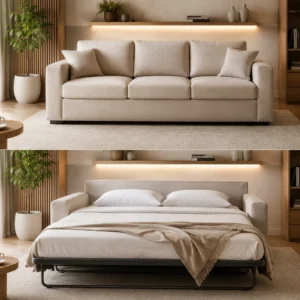
Sofa Beds That Actually Look Stylish

Older sofa beds were uncomfortable, bulky, and visually unattractive. Modern versions are completely different. Today’s sofa beds are sleek, compact, and designed specifically for urban apartments.

sofa beds

Why sofa beds work so well:

  • Eliminate the need for a separate guest room
  • Save significant floor space
  • Provide dual functionality
  • Many models include hidden storage drawers

For example, a one-bedroom apartment can instantly accommodate overnight guests without sacrificing the living room during the day.

Look for designs with:

  • Slim armrests
  • Neutral upholstery
  • Storage compartments
  • Easy pull-out mechanisms

A well-designed sofa bed can completely change how a compact apartment functions.

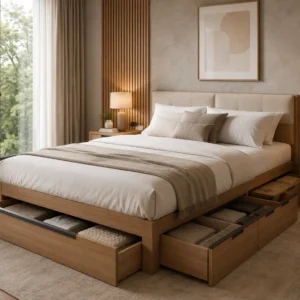
Storage Beds That Remove Bedroom Clutter

Bedrooms in small apartments often become overcrowded because of limited wardrobe space. Storage beds solve this problem elegantly. Instead of filling the room with extra cabinets, the unused space beneath the mattress becomes functional storage.

storage bed

Popular storage bed options:

  • Hydraulic lift storage beds
  • Drawer-based storage beds
  • Platform beds with shelving
  • Headboards with integrated compartments

These are especially useful for:

  • Seasonal clothing
  • Bedding
  • Suitcases
  • Extra pillows and blankets

One smart furniture upgrade can remove the need for multiple bulky storage units.

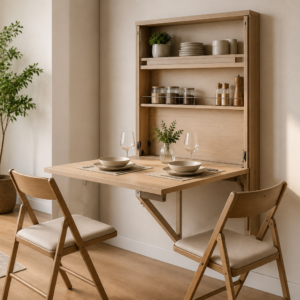
Foldable Dining Tables for Flexible Living

Traditional dining tables consume a surprising amount of space, especially in compact apartments where the dining area overlaps with the living room. Foldable and extendable dining tables offer a much smarter solution.

foldable dining table space saving furniture ideas for small apartments

The best options include:

  • Wall-mounted foldable tables
  • Extendable dining tables
  • Drop-leaf tables
  • Nesting tables

A foldable dining table can remain compact during daily use and expand only when guests arrive. This flexibility is one of the simplest ways to make a small apartment feel more open.

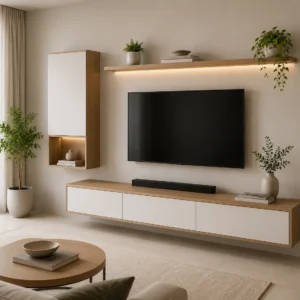
Wall-Mounted Furniture Creates Instant Space

One of the biggest mistakes apartment owners make is underutilising vertical space. Floor space is limited. Wall space is not. Wall-mounted furniture helps keep the apartment visually lighter while improving functionality.

wall mounted furniture a space saving furniture ideas for small apartments

Effective wall-mounted furniture ideas:

  • Floating TV units
  • Floating bedside shelves
  • Wall-mounted study desks
  • Floating shoe racks
  • Vertical shelving systems

When the floor remains visually clear, the apartment automatically feels larger and less crowded. An experienced interior design company in Calicut will often prioritise wall-mounted layouts specifically to improve openness in compact interiors.

Hidden Storage Furniture Makes Apartments Feel Cleaner

Visible clutter makes small apartments feel even smaller. Hidden storage furniture solves this problem without adding extra cabinets.

Smart hidden storage ideas:

  • Storage ottomans
  • Lift-top coffee tables
  • Storage benches
  • Hidden drawer seating
  • Beds with concealed compartments

For example, a storage ottoman can function as:

  • A footrest
  • Extra seating
  • A coffee table
  • Blanket storage

That is four functions from a single furniture piece.

Modular Furniture Offers Long-Term Flexibility

Modular furniture is ideal for modern apartment living because it adapts easily to changing needs. Unlike fixed furniture, modular systems can be

  • Rearranged
  • Expanded
  • Reduced
  • Reconfigured

Common modular furniture examples:

  • Modular sofas
  • Stackable shelves
  • Expandable wardrobes
  • Modular kitchen units
  • Sectional seating systems

This is especially useful for renters or homeowners who may relocate in the future. Instead of replacing furniture entirely, modular systems evolve with the space.

Benefits of Space-Saving Furniture

Choosing smart furniture solutions improves more than just storage.

Major advantages include:

  • Better organization
  • Improved comfort
  • More visual space
  • Lower long-term costs
  • Easier maintenance

Common Mistakes to Avoid

1. Buying oversized furniture

Furniture that looks perfect in a showroom may overwhelm a compact apartment. Always measure carefully before purchasing.

2. Prioritising appearance over function

Beautiful furniture with no storage or flexibility often becomes impractical quickly. In small apartments, function should always come first.

3. Blocking natural light

Tall furniture near windows makes rooms feel darker and smaller. Keep window areas visually open whenever possible.

4. Adding too many pieces

A few well-designed multi-functional items work far better than overcrowding the apartment with unnecessary furniture.

Expert Tips for Small Apartment Interiors

  • Use mirrors strategically
  • Stick to lighter tones
  • Choose furniture with exposed legs
  • Prioritize mobility
  • Think vertically

FAQ

What is the best furniture for a small apartment?

Multi-functional furniture like sofa beds, storage beds, and foldable dining tables are among the most effective choices for compact homes.

How do I make my apartment feel bigger?

Use light colours, wall-mounted furniture, mirrors, and minimal clutter to create a more open appearance.

Is modular furniture worth the investment?

Yes. Modular furniture adapts easily to changing layouts and offers long-term flexibility.

Which furniture saves the most space?

Murphy beds, storage beds, and foldable tables provide the highest space efficiency in compact apartments.

Should small apartments use dark furniture?

Large dark furniture can visually shrink a room. Lighter tones generally work better for compact interiors.

Transform Compact Spaces With Hedra Interio

Small apartments do not need to feel restrictive. With the right furniture choices, compact homes can become highly functional, visually spacious, and genuinely comfortable to live in. The most successful apartment interiors are not filled with more furniture. They are built around smarter furniture. By choosing practical, multi-functional, and storage-friendly solutions, homeowners can completely transform how their space feels and functions every day. The best space-saving furniture ideas for small apartments are the ones that quietly improve daily life while making the home feel simpler, cleaner, and more open.

Hedra Interio specialises in creating intelligent interiors designed for modern living. From customised storage solutions to stylish modular furniture, our team helps homeowners maximise functionality without compromising aesthetics. Whether you are redesigning a studio apartment or optimising a compact family home, we create interiors that feel spacious, practical, and beautifully balanced. Transform your home with smart, stylish, and functional interiors by Hedra Interio. Call +91 94474 18620 today.