

Most people don’t regret the sofa they didn’t buy. They regret the one they did. It looked perfect in the showroom, then arrived and swallowed half the living room, or turned out to be unbearable by the second summer. Furniture is one of the few purchases you live with every single day for ten years or more. A little planning before you spend saves a lot of money, and a lot of frustration later.
Start With How You Actually Live
Before you look at a single catalogue, think about your daily routine. The first step in how to choose furniture is being honest about how your household uses each space. Ask yourself a few simple questions:
- Who uses this room most, and at what time of day?
- Do you have children, elderly parents or pets at home?
- Do you host guests often, or is your home mostly quiet?
- Do you work from home and need a proper desk setup?
A family of six that eats together every night needs a very different table from a couple who mostly eat on the sofa. Buy for your real life, not the life in a magazine photo.
Measure Twice, Buy Once
This is the mistake we see most often. Someone falls in love with a piece, orders it, and finds out it won’t fit through the door or leaves no room to walk. Follow this simple routine:
- Measure the room length, width and height.
- Note the position of doors, windows, switches and AC units.
- Measure the doorways, lift and staircase the furniture must pass through.
- Mark the furniture footprint on the floor with masking tape.
- Walk around the taped area and check that you still have at least 80 cm of walking space.
If the room feels cramped with just tape on the floor, the real piece will feel worse.
Set a Budget That Includes the Hidden Costs
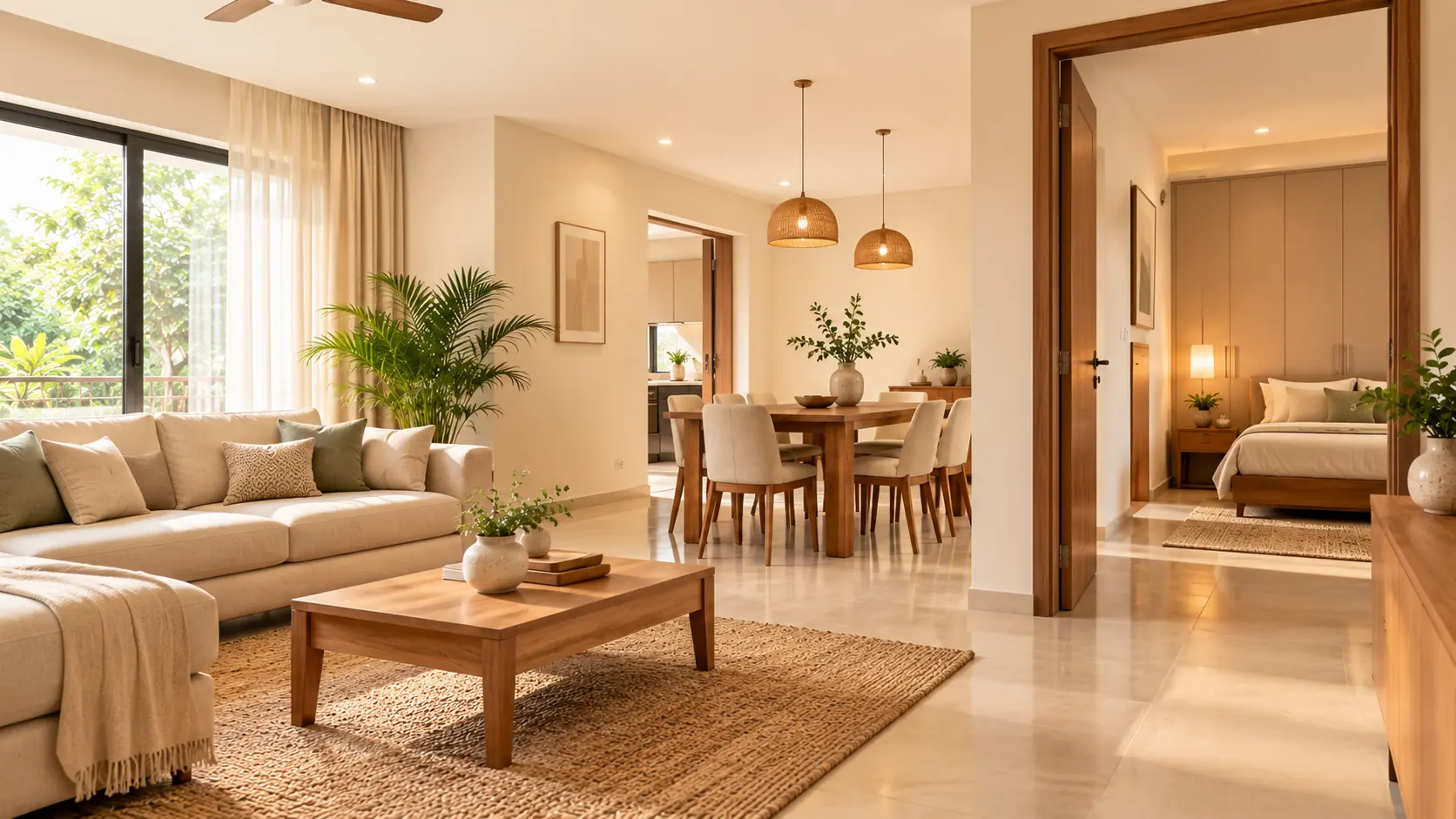
Your budget should cover more than the price tag. Delivery, installation, customisation and even a protective cover for the sofa can add up quickly. A good rule is to spend more on things you touch and use every day, such as your mattress, sofa and dining chairs. Save on pieces that are mostly decorative, like side tables or accent stools. Cheap furniture that needs replacing in three years is far more expensive than a well-made piece that lasts fifteen.
Match the Furniture to Each Room
The Living Room
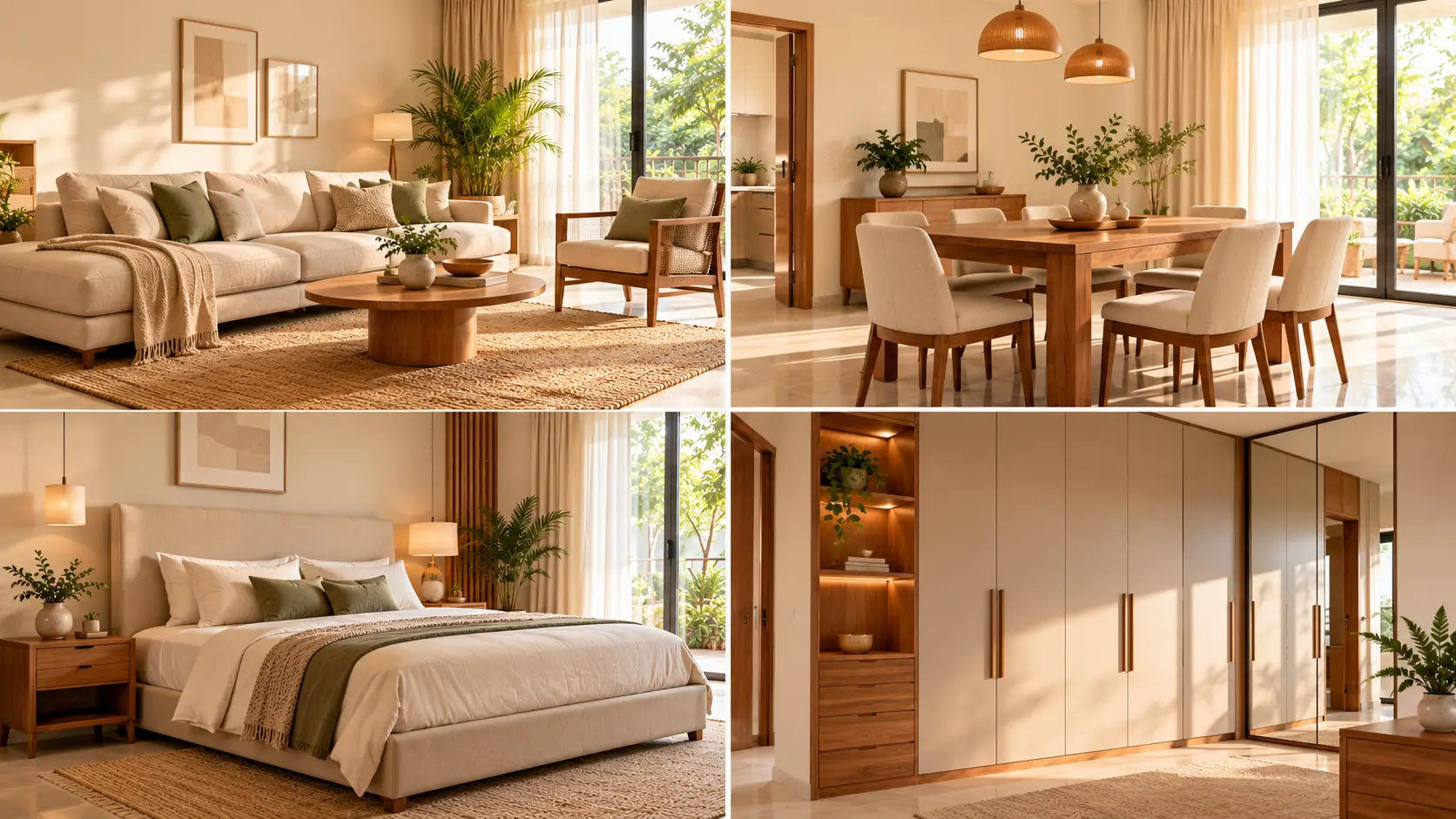
This is where your family relaxes and your guests form their first impression. Good living room furniture balances comfort with proportion. A large L-shaped sofa suits a spacious hall, while a compact two-seater with a pair of armchairs works better in a smaller flat. Leave a clear path through the room, and keep the TV at a comfortable viewing height.
The Dining Room
In a family home, the dining area is where the day’s conversations happen. When planning dining room furniture, pick a table size based on how many people sit there daily, then add extra seating for guests. Rounded corners are a smart choice if you have young kids. A table that can extend for festive occasions gives you flexibility without wasting space the rest of the year.
The Bedroom
Your bedroom should feel calm and uncluttered. Good bedroom furniture needs to handle humid weather, so look for sturdy joinery and moisture-resistant finishes. Choose the bed first, then the side tables, then everything else. Storage beds are a great idea when floor space is limited.
Storage and Wardrobes
Storage is where most homes struggle. Built-in solutions usually beat freestanding ones because they use every inch, including the space near the ceiling. A well-planned wardrobe furniture in Calicut project should include a mix of hanging space, shelves, drawers and a locker for valuables. Sliding doors help in narrow rooms, while hinged doors give easier access in larger ones.
Pick Materials That Survive Kerala’s Climate
Kozhikode’s monsoon humidity can be hard on poor-quality furniture. Wood swells, hinges rust, and cheap laminates peel at the edges.
Keep these points in mind:
- Solid wood lasts longest but needs good seasoning and polish.
- Engineered wood is budget-friendly, but choose boiling waterproof (BWP) grade for kitchens and bathrooms.
- Metal fittings should be stainless steel or coated to resist rust.
- Upholstery in breathable fabric like cotton blends feels better in hot weather than heavy synthetics.
Always ask about the plywood grade, the hardware brand, and the finish. A good seller will answer without hesitation.
Think Beyond Single Pieces
Furniture doesn’t live alone. It sits next to curtains, lighting, flooring, and wall colors, and the best rooms feel like all of it was planned together. Pick a simple colour palette of two or three tones and repeat them across rooms. Mix textures, such as wood with fabric or metal, to add depth. Keep one statement piece per room and let everything else support it.
For larger projects like a full home makeover, working with an interior design company in Calicut can save you from costly trial and error. A designer sees problems on paper that you would otherwise only notice after installation.
Plan the Kitchen Early
The kitchen is the one room where furniture and construction overlap. Cabinets, counters, chimneys, and appliances all have to work together, so decisions here should be made early. A well-planned modular kitchen in Calicut should follow the work triangle between the stove, sink and refrigerator, with enough counter space on both sides of the cooktop. Deep drawers, corner pull-outs, and tall units make everyday cooking easier. Spend a little extra on soft-close hardware, since you’ll use it hundreds of times a year.
Where to Buy and Who to Trust
The seller matters as much as the product. Before you pay anything, visit in person, sit on the sofa, open the drawers, and feel the finish. A reliable furniture shop in Calicut should offer clear pricing, honest advice about materials, written warranties, and proper after-sales support. If you are still wondering how to choose furniture for a specific room, a good seller will ask about your space and your habits before recommending anything. If they push the most expensive option immediately, walk away.
Common Mistakes to Avoid
- Buying furniture before measuring the room
- Choosing style over comfort
- Ignoring storage needs
- Filling every corner and leaving no breathing space
- Skipping warranty and after-sales questions
- Rushing the decision because of a festive discount
Frequently Asked Questions
Is solid wood always better than engineered wood?
Not always. Solid wood is durable but costly and needs care. Good-quality engineered wood with the right finish works very well for wardrobes, kitchens and storage units.
How do I know if furniture will fit my room?
Measure the room and the entry path, then mark the footprint on the floor with tape. Leave enough walking space around each piece.
Should I buy a full set or individual pieces?
Individual pieces give you more flexibility and often a more personal look. Sets can be convenient, but they sometimes force you to accept pieces you don’t need.
How long should good furniture last?
A well-made sofa or bed should last 10 to 15 years with proper care. Solid wood tables and storage units can last even longer.
Ready to Furnish Your Home the Right Way?
Good furniture isn’t about following trends. It’s about choosing pieces that fit your space, suit your routine, and still feel right years from now. Take your time, measure carefully, ask questions and trust quality over flash. Do that, and your home will feel comfortable long after the newness fades.
Visit Hedra Furniture & Interior at Thiruvannur, Mini Bypass, Kozhikode, or explore our collections. Our team will help you plan, customise and install furniture that fits your home and your budget. Call us or drop by any day between 9:30 am and 9 pm for a free consultation.
Add a Comment