

A wardrobe can either quietly solve your storage problems or become another source of clutter. The difference is rarely about how expensive the wardrobe is. It usually comes down to how well the design matches the room, the clothes you own, and the way you use your space every day.
Think about your morning routine. You open the wardrobe looking for a shirt, a saree, a pair of trousers, or an accessory. If everything has a sensible place, getting ready takes minutes. If shelves are too deep, hanging space is limited, or drawers are missing, even a large wardrobe can feel frustrating. That is why choosing a wardrobe should start with your habits rather than a catalogue photograph. From door styles and internal compartments to materials, colours, and available floor space, there are several things worth considering before you place an order. If you are searching for how to choose the right wardrobe design, this guide will help you make the decision based on practical requirements rather than trends alone.
Look at Your Room Before Looking at Wardrobe Designs
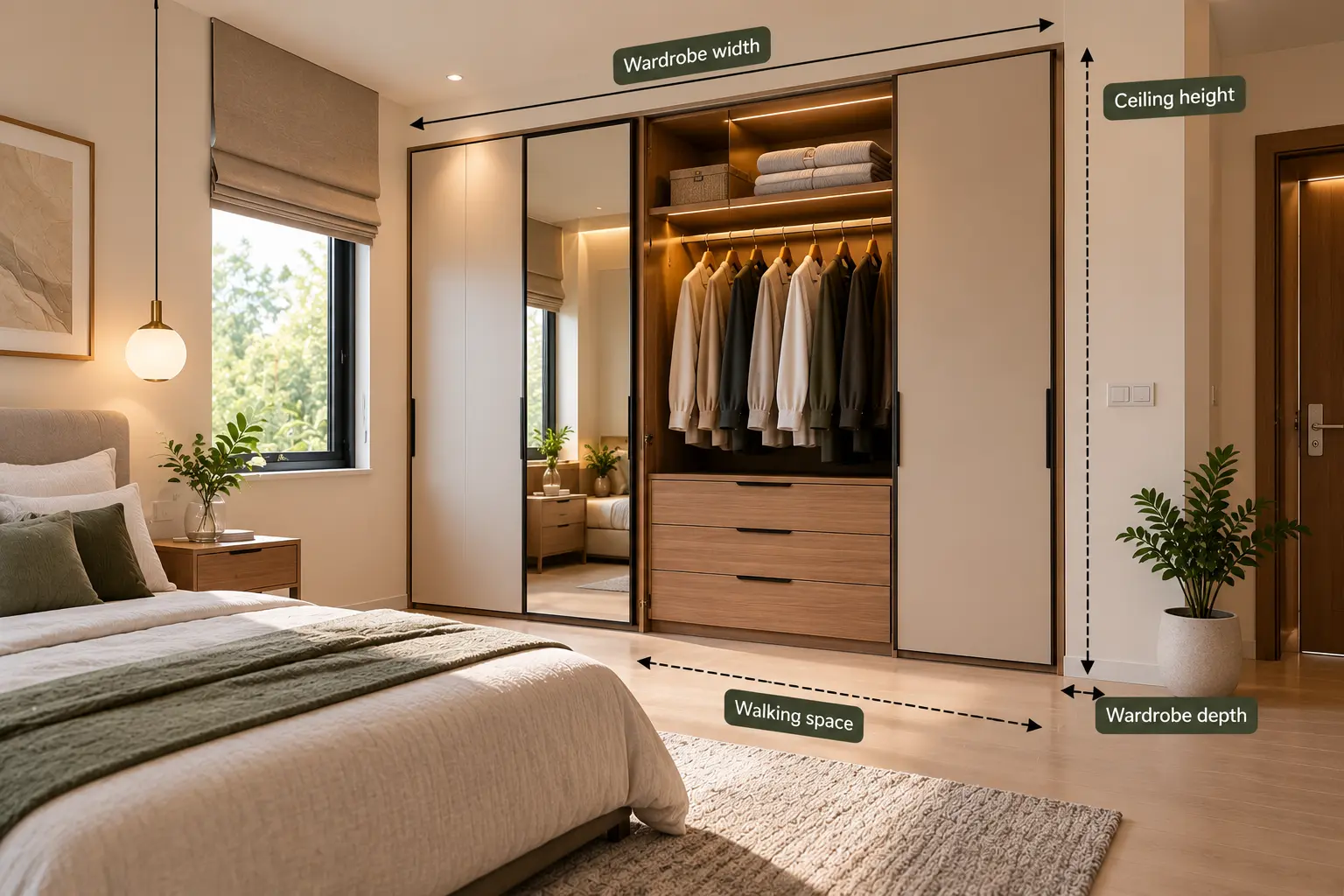
The wardrobe has to fit into the room, so the room should determine the starting point. Measure the wall where you intend to install it. Then look at everything around that wall. Is there a bedroom door nearby? Does a window open towards it? Is there a switchboard behind where the wardrobe might go? How much space is available between the wardrobe and the bed?
These details may seem minor during the planning stage, but they can affect how comfortably you use the bedroom later.
Pay attention to:
- Wall width and ceiling height
- Available floor space
- Distance between the wardrobe and bed
- Door and window positions
- Electrical switches
- Natural light
- Existing furniture
- Ceiling beams or unusual wall shapes
A wardrobe that fits the measurements perfectly but blocks movement is still a poor choice.
Take Inventory Before Planning the Inside
The outside appearance is easy to choose. The inside needs more thought. Open your existing wardrobe and look at what is actually inside. You may discover that you need much more hanging space than shelving. Someone else in the same-sized bedroom might need several drawers for folded clothes and accessories.
Ask yourself:
What do I own, and where should each category go?
For example, a wardrobe may need separate areas for:
- Shirts and tops
- Trousers and jeans
- Dresses
- Sarees
- Jackets
- Folded clothes
- Bags
- Shoes
- Watches and jewellery
- Bed linen
- Seasonal clothing
This simple exercise can completely change the wardrobe layout you initially had in mind.
Hinged or Sliding Doors? Think About Movement
Wardrobe doors affect more than appearance. They also affect how much usable space you have in front of the unit.
Hinged Wardrobes
Hinged doors open towards the room. They are a familiar choice and provide a wide opening when you want to see the contents of the wardrobe. They can work particularly well in larger bedrooms where there is sufficient clearance.
Sliding Wardrobes
Sliding doors move sideways instead of opening into the room. This makes them useful when floor space is limited. They can also create a continuous visual surface across a wall. Mirror panels, wood finishes, glass, or muted laminates can be used depending on the character of the bedroom. Neither option is automatically better. The right choice depends on your room dimensions, access requirements, and preferred appearance.
The Inside Matters More Than You Think
A wardrobe can have beautiful doors and still be badly designed inside. One common problem is creating large shelves without thinking about what will actually go on them. Deep shelves can cause folded clothes to disappear at the back, while a shortage of drawers can leave accessories scattered around the room. Instead, divide the wardrobe according to use.
Hanging Section
Keep enough vertical space for garments that need to remain wrinkle-free.
Shelves
Use shelves for folded clothing, bags, boxes, and other items that can be stacked.
Drawers
Drawers are useful for smaller clothing items, accessories, watches, and personal belongings.
Upper Compartments
The highest sections are ideal for luggage, blankets, seasonal clothes, and things that are not needed every day. A wardrobe does not need to have dozens of compartments. It needs the right compartments.
Match the Design to Your Daily Routine
Two people can have completely different storage requirements. Someone who wears formal clothes regularly may need more hanging rails. Someone with a large collection of sarees may need wider and taller storage sections. A child may benefit from adjustable shelves that can be changed as they grow.
This is why copying a wardrobe layout from Pinterest or Instagram is not always useful. Instead, consider your own routine. If you reach for certain clothes every morning, place them somewhere easy to access. If something is used only once or twice a year, there is little reason to give it prime storage space. Good wardrobe design quietly supports your routine without making you think about it.
Make a Small Bedroom Feel Less Crowded
In a compact bedroom, the wardrobe can occupy a significant portion of the visible wall. That does not mean it has to dominate the room. Sliding doors can help preserve movement space. Lighter finishes can make a large wardrobe feel less visually heavy. Using the full height of the wall can also increase storage without increasing the wardrobe’s footprint. Mirrored doors are another option when appropriate. They can serve a practical purpose while reflecting light and giving the room a more open visual quality. Another useful idea is combining functions. A wardrobe can incorporate a dressing mirror, drawers, open niches, or a compact dressing area, reducing the need for several separate pieces of furniture.
Choose the Finish With the Whole Bedroom in Mind
Your wardrobe should not look like an isolated box placed inside the bedroom. Look at the existing flooring, wall colour, bed, side tables, curtains, and lighting before choosing the finish. For a calm bedroom, soft neutrals and natural wood textures can work well. If the rest of the room is understated, a darker wardrobe can become a visual feature. In a smaller room, a lighter finish may help maintain an airy appearance.
Some popular choices include:
- Woodgrain laminates
- Solid neutral colours
- Matte finishes
- High-gloss finishes
- Mirror panels
- Glass sections
- Two-tone combinations
The goal is not to choose the most fashionable finish. Choose one that you will still enjoy looking at several years from now.
Do Not Overlook the Hardware
The hinges, drawer channels, handles, and sliding mechanisms may not be the first things you notice, but you will use them every day. A wardrobe door may be opened several times a day. Drawers may carry considerable weight. Sliding panels need to move smoothly along their tracks. When comparing wardrobe options, ask about the hardware being used.
Pay attention to:
- Door hinges
- Drawer channels
- Sliding tracks
- Handles
- Soft-close mechanisms
- Load capacity
- Warranty
Spending a little more on reliable hardware can make a noticeable difference to the everyday experience of using the wardrobe.
Custom Wardrobes Can Solve Awkward Spaces
Not every bedroom has a perfectly shaped wall. You may have a narrow corner, an uneven wall, a low ceiling section, or a space that requires storage around another architectural feature. This is where custom furniture becomes particularly useful.
With custome furniture in Calicut, homeowners can plan storage around the actual dimensions of their room instead of trying to make a standard-sized product fit. Customisation can also help when you have specific requirements, such as extra saree storage, a dedicated shoe section, additional drawers, or a combination of open and closed storage.
Consider the Rest of Your Home
A wardrobe does not have to be planned in isolation. If you are designing several rooms at the same time, think about maintaining some consistency between the furniture pieces. Similar wood tones, handles, textures, or neutral colours can create a connection between different spaces.
For homeowners working on a complete interior project, an interior deisgn company in Calicut can help coordinate wardrobes with the bedroom, living room, kitchen, and other furniture so that the home feels visually connected. If the project also includes a kitchen, for example, you can consider whether similar cabinet finishes or materials should be carried into other parts of the home.
When Buying Furniture, Look Beyond the Front
A polished showroom display can tell you a lot about appearance, but not necessarily about construction. If you visit a furniture shop in Calicut, take the opportunity to examine the actual product closely.
Look inside the cabinets. Open the drawers. Move the doors. Check the edges and corners. Ask what material has been used and how the unit is installed. These simple checks can tell you much more than a photograph. For homeowners specifically looking for wardrobe furniture in Calicut, it is also useful to look at completed installations. A finished project gives you a better idea of how the furniture looks in a real bedroom rather than in a showroom setting.
Benefits of Getting the Wardrobe Design Right
The right wardrobe can have a surprisingly large effect on a bedroom.
- More Useful Storage
- Easier Organization
- Better Use of Floor Space
- A Cleaner Bedroom
- A More Personal Interior
- Longer-Term Convenience
Expert Tips Before You Finalize Your Wardrobe
Before approving the final design, take a few minutes to check the details.
- Measure twice. Confirm the wall dimensions and available clearance.
- Count your clothes. Estimate how much hanging and folded storage you genuinely need.
- Think vertically. Use upper sections for items you rarely access.
- Plan for accessories. Small items need dedicated storage.
- Check door movement. Make sure doors will not interfere with the bed or other furniture.
- Inspect hardware. Ask what hinges, channels, and tracks are being used.
- Think five years ahead. Your storage requirements may change.
- Avoid unnecessary compartments. More sections do not automatically mean better storage.
- Coordinate the finish. Consider the wardrobe alongside the rest of the bedroom.
- Ask about installation. Even a good design can suffer from poor fitting.
Common Wardrobe Mistakes to Avoid
Choosing a Design Before Measuring
A wardrobe should be designed for your room, not the other way around.
- Not Planning Hanging Space
- Making Every Shelf the Same Size
- Ignoring the Top Section
- Selecting Hardware Only by Price
- Following Trends Blindly
Frequently Asked Questions
What is the best wardrobe design for a small bedroom?
A sliding wardrobe is often worth considering because the doors do not swing into the room. Tall storage units can also make better use of the available wall height.
Are sliding wardrobes better than hinged wardrobes?
Neither is universally better. Sliding wardrobes can be useful where floor space is limited, while hinged wardrobes provide a wider opening and easy access to individual sections.
How do I decide the internal wardrobe layout?
Start by categorising what you own. Separate hanging clothes, folded clothing, accessories, shoes, bags, and seasonal items. Design the compartments around those categories.
Is a custom wardrobe worth the investment?
Custom wardrobes can be worthwhile when you have unusual room dimensions or specific storage requirements. They allow the design to be adapted to your space rather than forcing your belongings
Design a Wardrobe That Fits Your Home With Hedra
Your wardrobe should fit your room, your belongings, and your everyday routine. At Hedra, we create thoughtfully designed furniture that combines practical storage with a clean, contemporary look. From space-saving wardrobes for compact bedrooms to customized storage solutions for larger homes, our team can help you choose the right layout, materials, finishes, and internal storage for your needs.
Planning a new wardrobe for your home? Get in touch with Hedra today and turn your storage space into a smart and stylish part of your interior.
Add a Comment