
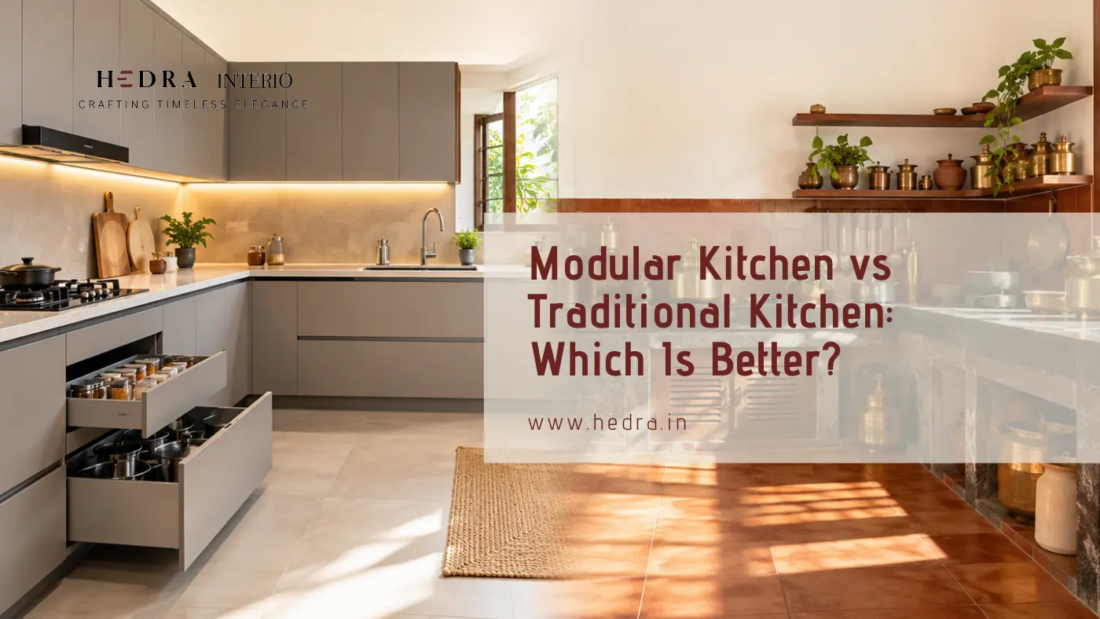
Picture this. You are cooking dinner, the pressure cooker is whistling, and you are hunting for the one steel container that always hides behind five others. You bend, stretch, shuffle, and sigh. If that sounds familiar, your kitchen may be the problem, not your cooking.
The modular kitchen vs. traditional kitchen debate comes up in almost every home renovation conversation in Kerala. Both have loyal fans, and both can work well. The right choice depends on your family, your budget, and how you actually cook. Let’s break it down properly.
What Is a Traditional Kitchen?
A traditional kitchen is built on site. A carpenter and a mason work with plywood, wood or concrete, and everything is shaped around the space as it stands. Think slab platforms, fixed shelves, and cupboards under the counter.
Many of us grew up in one. They feel familiar, and they can be very sturdy.
What Is a Modular Kitchen?
A modular kitchen is made of factory-finished units (base cabinets, wall cabinets, tall units, and drawers) that are measured, built, and then fitted together in your home. Each unit has a purpose, like a pull-out for oils, a corner carousel, or a slot for plates.
The idea is simple. Plan the kitchen around how you move, not just where the walls are.
Modular Kitchen vs Traditional Kitchen: Side-by-Side Comparison
Here is a quick view before we go deeper.
| Factor | Modular Kitchen | Traditional Kitchen |
| Installation time | 2 to 4 weeks, mostly fitting | 4 to 8 weeks, mostly on site |
| Storage | Smart, organized accessories built in | Basic shelves, often wasted corners |
| Cost | Higher upfront, predictable | Lower upfront, can grow with changes |
| Finish and looks | Clean, uniform, many styles | Depends on the carpenter’s skill. |
| Maintenance | Easy to wipe and clean | Needs more care, especially wood |
| Repairs | Replace one unit. | Often rework the whole section. |
| Customization | High, within unit sizes | Very high, any shape |
| Resale appeal | Strong | Moderate |
Why More Homeowners Are Choosing Modular Kitchens
Let’s talk about what actually changes in daily life.
Storage That Works for You
Modular layouts use tall units, tandem drawers, corner solutions, and cutlery trays. Nothing is lost in the dark corners of a cupboard. Most families end up with 25 to 30 percent more usable space without enlarging the kitchen.
Faster, Cleaner Installation
Units are made in a controlled factory, so cutting dust and mess at your home is minimal. That matters if you are living in the house during the work.
Easier Cleaning
Smooth laminates, acrylic, and PU finishes wipe clean in seconds. Oil splashes and masala stains do not soak in the way they do into raw wood or rough plaster.
Better Planning
Good modular design follows the work triangle: stove, sink, and refrigerator placed within easy reach. Less walking, less fatigue, and more joy in cooking.
For homeowners looking at a modular kitchen in Calicut, humidity is a real factor. Moisture-resistant boards and proper hardware are not optional in coastal Kerala, so ask about them before you sign anything.
Where a Traditional Kitchen Still Wins
Modular is not automatically better. Traditional kitchens have real strengths.
- Unusual spaces: Odd angles, slanting walls, or old heritage homes often suit custom on-site work.
- Lower starting cost: For a basic kitchen with simple needs, the budget can be much friendlier.
- Strong material feel: Solid wood and stone have a warmth that many families love.
- Easy local repair: Any carpenter in town can fix it.
If you cook large traditional meals with heavy vessels, a sturdy built-in platform may suit you better than a light-duty cabinet system.
Benefits at a Glance
Modular kitchen advantages:
- Organised storage with dedicated spots for everything
- Quicker installation and less site mess
- Modern look with consistent finishes
- Individual units can be replaced or upgraded
- Higher value when you sell or rent the home
Traditional kitchen advantages:
- Lower initial investment
- Flexible for irregular layouts
- Familiar materials and easy local servicing
- Full freedom in shape and size
Expert Tips Before You Decide
Hedra’s design experience shows the same few questions help most families choose well.
- Measure your habits, not just your room. How many people cook at once? Do you fry often? Do you bake?
- Fix your budget with a buffer. Keep 10 to 15 percent aside for hardware, lighting and surprises.
- Prioritise hardware. Hinges, channels and drawer systems decide how the kitchen feels five years from now.
- Think about ventilation. A powerful chimney matters more in Indian cooking than most people expect.
- Visit before you buy. Open drawers, test soft-close, and feel the finishes. A reliable furniture shop in Calicut will let you do this and compare samples side by side.
Common Mistakes to Avoid
Even a good kitchen can disappoint when the planning is rushed. Watch for these.
- Choosing looks over function. A glossy finish is lovely until fingerprints show every morning.
- Ignoring the work triangle. A stove at one end and a sink at the other makes cooking tiring.
- Skimping on counter space. You will always need more prep area than you think.
- Poor lighting. Add task lights under wall cabinets, not just one ceiling fixture.
- Skipping the site survey. Walls are rarely straight, and exact measurements save expensive corrections.
- Going with the cheapest quote. Low prices often hide thin boards and weak fittings.
Working with experienced interior designers in Calicut helps you avoid most of these early, because they catch layout and material problems before anything is cut.
Which One Should You Pick?
Here is a simple way to decide. Choose a modular kitchen if you want smart storage, a clean modern look, faster work and easier long-term upkeep. Choose a traditional kitchen if your space has unusual dimensions, your budget is tight, or you prefer solid, handcrafted materials. Many homes even blend the two, using a built-in stone platform with modular cabinets above and below. This hybrid keeps the best of both worlds. When it comes to modular kitchen vs traditional kitchen, the honest answer is that neither wins every time. A thoughtfully planned kitchen of either type beats a rushed one every day.
Frequently Asked Questions
Is a modular kitchen more expensive than a traditional kitchen?
Usually, yes, at the start. A modular kitchen costs more upfront because of factory finishing and accessories. Over time, easier maintenance and replaceable units can balance the difference.
How long does a modular kitchen last?
With quality boards and hardware, 15 to 20 years is realistic. Moisture-resistant materials extend this in humid climates.
Can a modular kitchen be installed in a small space?
Absolutely. Small kitchens often gain the most, since tall units and corner fittings use every inch.
Is a modular kitchen suitable for heavy Indian cooking?
Yes, when designed properly. Use a strong chimney, heat-resistant finishes near the hob, and stainless steel baskets and drawers.
Can I convert my traditional kitchen into a modular one?
In most cases, yes. A designer will survey your space, keep what works, and replace the rest with modular units.
Ready to Design a Kitchen You Will Love?
At Hedra Interio, we have spent years planning kitchens that look good and work hard for real families. Whether you lean modular, traditional or a smart mix of both, our team will guide you from the first sketch to the final handover.
Visit hedra.in or call us today to book your free consultation. Let’s turn your kitchen into the heart of your home.
Add a Comment